
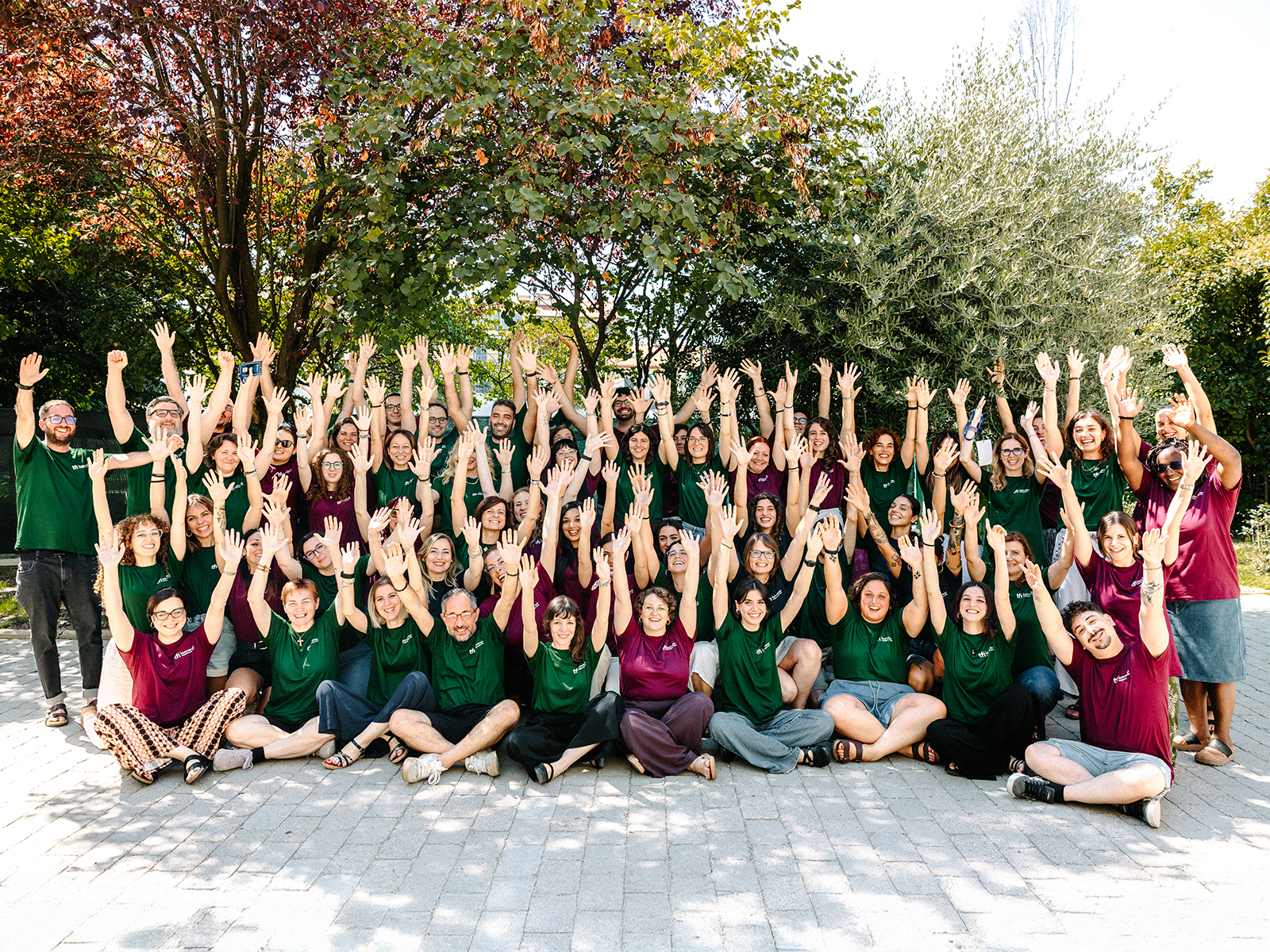
Two teachers, two years of Fellowship and a journey that continues beyond the classroom
For several years, Fondazione Marcegaglia has supported Teach For Italy, a non-profit organisation committed to tackling educational poverty by training teachers who work in schools facing particularly complex social challenges.
The partnership is part of Teach For Italy’s 2024–2026 growth plan and specifically supports the training of female Fellows through a two-year programme that combines classroom teaching with training, mentoring and professional support. We previously explored the journey and objectives of this partnership in the article Teach For Italy: building opportunities through education, dedicated to the Fellowship and to the role of teacher training in tackling educational poverty.
Following the completion of the Fellowship, we return to the project through the voices of Silvia Zaghi and Veronica Camaioni, two teachers supported in their journey with Teach For Italy and now part of the Alumni community, the network that brings together those who have completed the Fellowship.
Their experiences, developed in different areas and school contexts, show how training can translate into new tools, greater awareness and the ability to generate an impact that extends beyond the individual classroom. Two different journeys, united by the same belief: school can become a place where every student finds their voice, differences become resources and the relationships built in the classroom can generate change that also involves families and communities.
Silvia Zaghi: giving everyone a voice, building participation
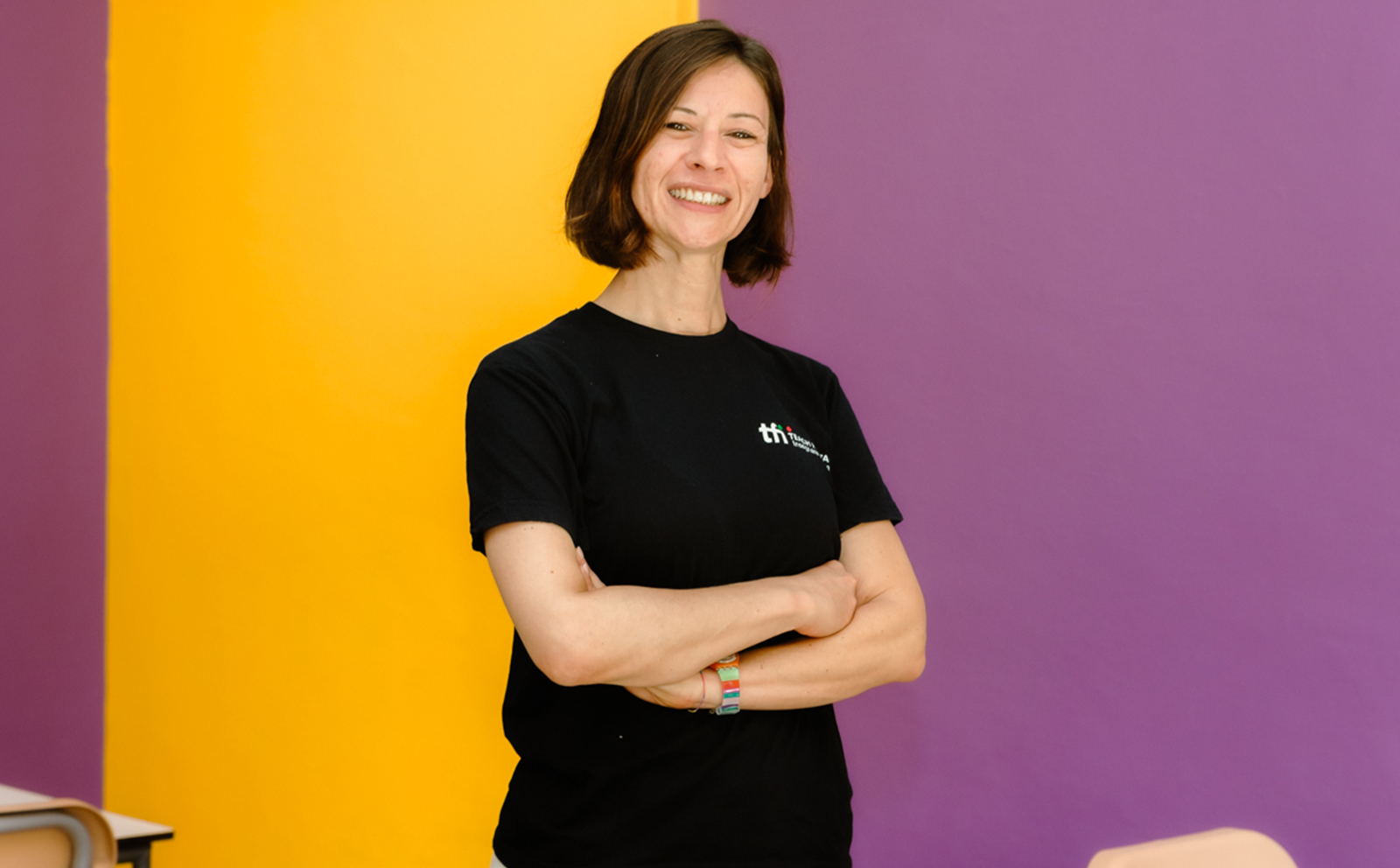
Silvia Zaghi teaches at a primary school in Ferrara, in an area characterised by significant social and cultural diversity: around 58% of the school’s pupils come from 20 different countries, and the local area is also home to a long-established Sinti community. It is a school where differences are part of everyday life and can become a practical starting point for building participation and inclusion.
When we first told Silvia’s story at the beginning of the Fellowship, one of the key themes of her work was disagreement: how to transform it from a disciplinary problem into an opportunity for dialogue and civic growth. Two years later, that idea has become part of the way she approaches life in the classroom.
Even apparently small decisions – choosing a game to play during break time or redefining classroom agreements together – become opportunities to listen to different points of view, discuss possible solutions and reach shared decisions. But the change also concerns Silvia herself: the Fellowship has encouraged her to pay closer attention to who finds it easy to speak up and who, on the other hand, risks remaining on the margins, while also questioning the biases that can unconsciously influence a teacher’s perspective.
“One of the aspects I focus on most is giving every student the opportunity to make their voice heard.”
This attention to identity and participation also emerged when Silvia shared the results of the MEL – Monitoring, Evaluation, and Learning survey with her class, the assessment used by Teach For Italy to evaluate its impact on teachers, students and schools. Silvia introduced the children to the international reach of the Teach For All network, also connecting it to the countries their families come from.
“Seeing the amazement in their eyes at the number of students reached and at this unexpected form of connection – global and linked to their countries of origin – made me realise just how important this programme can be in recognising aspects of identity that often risk being overlooked.”
Sharing what we learn
Over the two years of the Fellowship, however, Silvia’s journey has not remained confined to her own classroom. Together with her colleagues, she helped develop an internal training programme for teachers and educational staff at her school, starting from the real needs of those involved and creating opportunities for discussion, practical tools and shared resources.
The experience of the first year helped shape the following one: groups with different needs and levels of experience were able to work on tools for supporting special educational needs, more specialised methodologies and materials that could be made available to the whole school. In more complex cases, the training was complemented by dedicated discussion sessions with individual teams.
The shift is significant: what begins as an individual professional development journey gradually becomes shared expertise, capable of involving other teachers and influencing the way the school responds to needs and challenges.
Today, Silvia’s perspective is widening even further. Having completed the Fellowship, she remains part of the Teach For Italy network and is focusing in particular on the relationship between school, families and the local community. In the neighbourhood where she teaches, family participation in school life is still limited, but new opportunities for engagement are beginning to take shape: a local neighbourhood committee, discussion sessions on issues affecting students and parents, and greater attention to school spaces as places open to the wider community.
This is where Silvia now places one of the most important goals of the journey she began two years ago:
“The investment made over these two years […] is in building structured educational partnerships between school, families and the local community, increasing participation, a sense of belonging and the possibility of becoming promoters of lasting positive impact in the neighbourhood.”
A journey that began in the classroom and is now increasingly focused on building a shared educational community.
Veronica Camaioni: when language becomes belonging
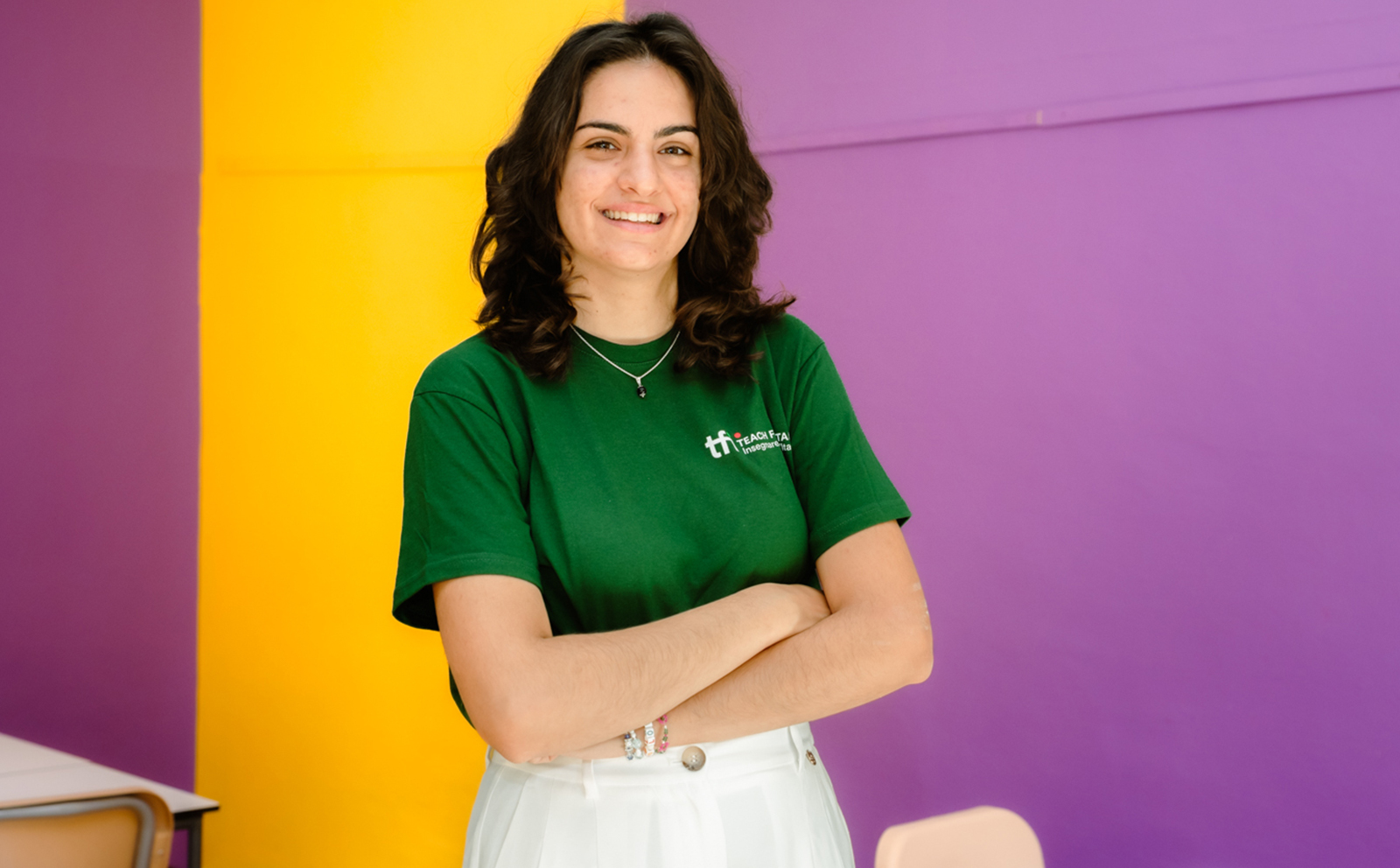
Veronica Camaioni teaches Italian as a second language (L2) at a lower secondary school in the province of Vicenza, in an area characterised by a strong presence of families from abroad and frequent arrivals of new students during the school year. Twenty-six different nationalities are represented at the school: a diversity of languages, stories and cultures that makes school one of the few places where very different communities can genuinely meet.
This is where Veronica’s work begins. Learning Italian is essential for taking part in school life and building relationships, but it cannot mean setting aside one’s language of origin. On the contrary, recognising it means recognising part of a student’s identity and creating the conditions for them to feel welcomed, seen and part of the community.
“Having a class of 25 students who speak different languages is something incredibly valuable. We should not take it for granted or treat it as a problem, but embrace it in order to make school a true place of exchange, where every language has equal dignity.”
This becomes even more important for young people who have recently arrived in Italy. The first few weeks can be marked by a strong sense of distance from the rest of the class and by the difficulty of finding one’s place in an unfamiliar environment. For Veronica, a teacher’s role is also to support students through this transition, strengthening their confidence in their own abilities and their awareness that they can become active protagonists in their own journey.
But inclusion does not happen simply because people share the same classroom. It requires a deliberate educational choice: creating opportunities for those who tend to remain on the margins to speak, bring their own experiences and contribute to building the school community.
A simple gesture that captures the value of exchange
Among the experiences she has had in the classroom, Veronica describes an activity that immediately conveys the meaning of this approach. Together with her third-year students, she is working on the creation of a bilingual book, written in Italian and in the students’ mother tongues, which will then be donated to the primary school so that younger children can also find books in their own language.
During one of the activities, a very diligent and shy student was writing her name in both Italian and Bengali script. She then wrote Veronica’s name too.
A simple gesture, but one that, for Veronica, captures the deeper meaning of the exchange taking place in the classroom:
“This is what exchange means: feeling that something, however small, has come back to me, knowing that she has taught me something of her own. Now I know that, despite all the effort she is putting into learning Italian, she is not ashamed of her language.”
It is in moments like this that multiculturalism stops being simply a characteristic of the classroom and becomes a tangible educational resource: not merely the coexistence of differences, but an opportunity to get to know one another, recognise one another and learn from one another.
Having completed the Fellowship, Veronica has chosen to continue her journey primarily within classrooms and schools, while also taking with her the network she has built with other Teach For Italy Fellows, which she sees as a way to share experiences and amplify the change generated every day in individual school contexts.
“In the coming years, it will be precisely this network that gives us the opportunity to multiply the change that each of us brings both inside and outside the school.”
A perspective that restores the broader role of school: creating connections, recognising differences and turning them into opportunities for growth.
From the Fellowship to broader change
Silvia and Veronica have completed their two-year Fellowship, but the journey they began with Teach For Italy does not end with the training programme. Both remain part of the Alumni network, which brings together teachers who have completed the programme and enables them to continue exchanging ideas, sharing experiences and circulating the skills developed in different school contexts.
For Silvia, this means continuing to strengthen the relationship between school, families and the local community; for Veronica, it means continuing her daily work in the classroom while also benefiting from dialogue with a wider network of teachers.
Two different directions rooted in the same awareness: teacher training can have effects that extend far beyond the individual lesson, helping to build more inclusive and participatory schools that are able to create opportunities for students and communities.
Supporting schools means creating opportunities
The partnership with Teach For Italy confirms Fondazione Marcegaglia’s commitment to viewing education and training as essential tools for tackling inequality and expanding opportunities for younger generations.
Silvia and Veronica’s experiences show how investing in teachers can help create more inclusive school environments, capable of recognising students’ potential and building stronger relationships with the communities in which they operate.
Discover all the projects supported by Fondazione Marcegaglia
Collaboration with companies and partners also helps strengthen educational and training projects and create new opportunities for people and communities.
Discover how companies can support Fondazione Marcegaglia’s projects
Through Italy’s 5×1000 tax donation scheme, it is also possible to contribute to initiatives promoting education, inclusion and new opportunities for growth.